In progress / Case study (evidence pending)
CI/CD Pipeline System
Automated build, test, validation, and deployment workflow using GitHub Actions.
Overview
A delivery workflow that turns source changes into a sequence of repeatable quality and deployment checks.
Problem
Manual release steps create inconsistent results and make it difficult to see where a deployment failed.
My role
Workflow design, validation stages, deployment automation, and failure visibility.
Stack
- GitHub Actions
- AWS
- Terraform
- HCL
- Bash
Architecture
Source-to-deployment pipeline
A repository event starts build and test jobs, continues through validation, and reaches deployment only after required checks pass.
01 Source change
Pull request or push
02 Build
Artifact creation
03 Test
Automated checks
04 Validate
Release gate
05 Deploy
Target environment
Key features
- • Build and test stages
- • Deployment validation gate
- • Readable job-level failure reporting
Deployment
Deployments run only after required GitHub Actions jobs complete successfully.
Security
Deployment credentials stay in repository secrets and workflow permissions are kept explicit.
Challenges
- • Keeping jobs reusable without hiding important behavior
- • Making failures actionable from the workflow log
What I learned
- • A pipeline should explain why a release stopped
- • Explicit permissions reduce accidental workflow access
Proof and evidence
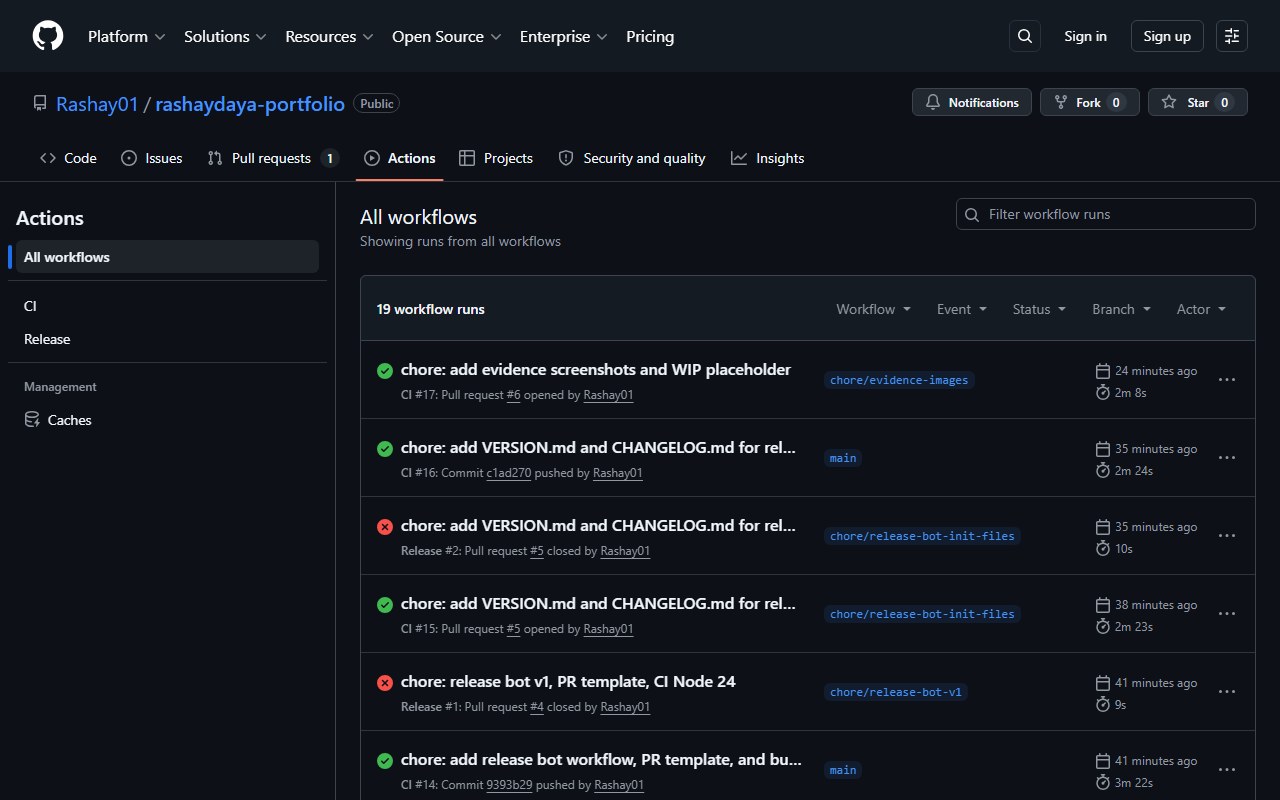
pipeline
Real pipeline run
A successful run of this exact portfolio's own build/test pipeline (the repo versions and deploys itself), shown here as a real, independently verifiable instance of the pattern this case study describes.
View verified evidence ↗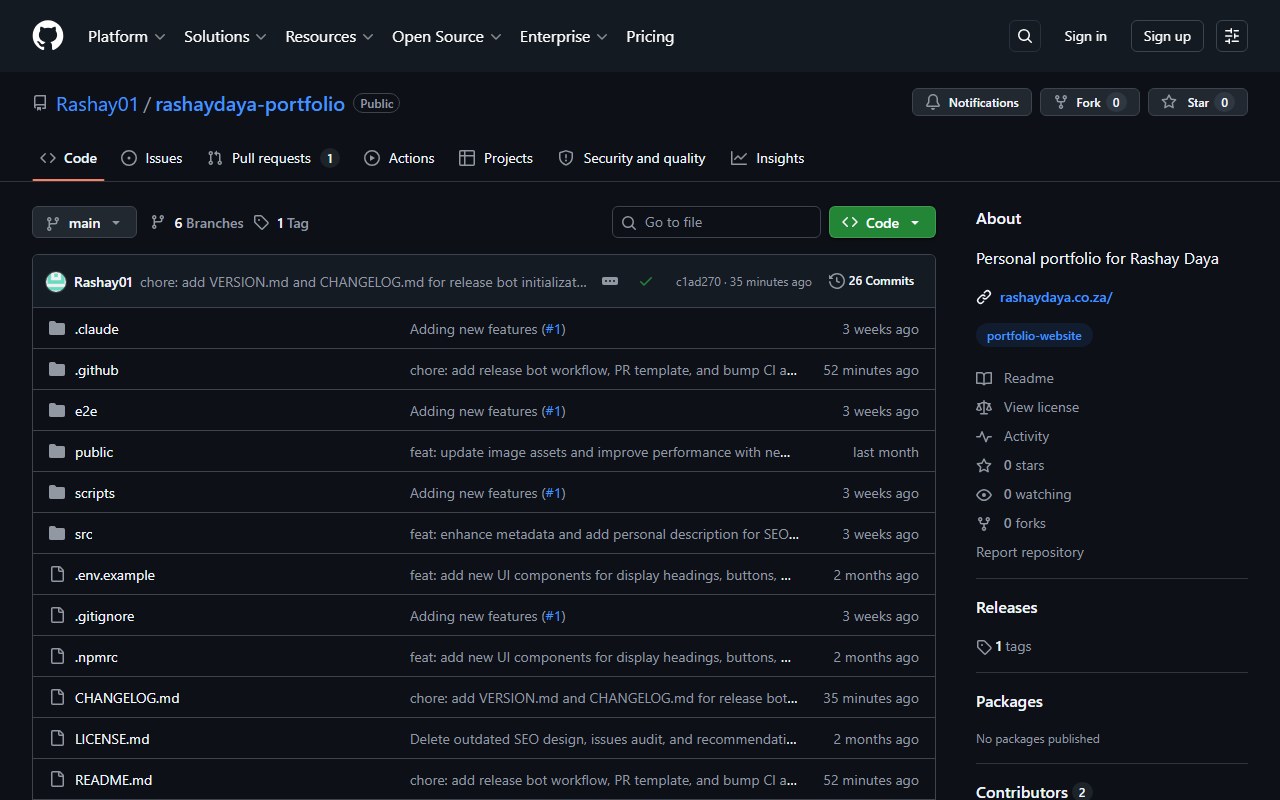
deployment
Live repository
The public GitHub repository for this portfolio ships through the same CI/CD pattern described here: PRs trigger lint, unit tests, and e2e tests before anything reaches main.
View verified evidence ↗