Live / Case study
Event RSVP & Media Platform
Multi-event guest RSVP and photo-gallery platform: Express on Firestore, Terraform-provisioned R2 storage, and a three-version image pipeline that keeps storage cost close to nothing.
- Live production site· Verified 2026-05-24
- Private client project
- Case study available
- Architecture available
Overview
Guests needed to RSVP across several ceremonies on one form, see who else in their family group was attending, and upload event photos without creating an account. The backend is Express on Firestore, with a deliberate split: the Firestore Client SDK handles family and guest records, the Admin SDK handles photo metadata and moderation, so the two concerns never share a trust boundary by accident. Every photo upload gets processed into three versions (original, a 1200px compressed copy, and a 300x300 thumbnail) before it reaches Cloudflare R2, so the gallery never serves a multi-megabyte original to a guest scrolling on mobile data.
Problem
The event needed a controlled guest flow across multiple ceremonies, reliable concurrent RSVP writes from family groups submitting at the same time, and a photo gallery that would not become an expensive or unbounded storage liability, all without exposing administrative data or storage credentials.
My role
Frontend, backend, deployment, guest workflow, photo pipeline, and storage infrastructure (Terraform).
Stack
- React
- Vite
- Express.js
- Firebase
- Cloudflare R2
- Terraform
Architecture
Validated guest flow with a three-version photo pipeline
The React client validates guest records through the Express API, records RSVP state in Firestore using transactions for concurrent family submissions, and routes every photo upload through a Sharp-based resize step before it lands in a Terraform-provisioned R2 bucket.
01 Guest
Validated browser flow
02 React client
Vite, RSVP and gallery UI
Validated request
03 Express API
Validation boundary
RSVP state (transactional)
04 Firestore
Dual SDK, transactional RSVP state
05 Image pipeline
Sharp, 3 versions per photo
Original + compressed + thumbnail
06 Cloudflare R2
Terraform-managed, CORS-scoped
Key features
- • Multi-event RSVP across several ceremonies in one form, with per-family attendance tracking
- • Firestore transactions so two family members RSVPing at the same moment never clobber each other's write
- • Three-version image pipeline (original, 1200px compressed, 300x300 thumbnail) ahead of every R2 upload
- • Terraform-provisioned R2 bucket with CORS scoped to the production domain and local dev ports only
Deployment
The client and Express API deploy as separate production concerns with storage credentials kept server-side. R2 bucket creation, the custom domain, and CORS rules are defined in Terraform rather than clicked together in a dashboard, so the storage layer is reproducible if it ever needs to move.
Results
- • Ran the real event’s RSVP and media flow live at marrying-maharaj.co.za, independently verifiable via the link above
- • Guest validation and media uploads handled with no exposed storage credentials
- • Photo storage costs stayed negligible across the event by compressing every upload before it reached R2, instead of storing originals unprocessed
Security
Guest validation gates every RSVP and upload action, storage credentials never reach the browser, and the photo pipeline strips and rewrites image metadata during the resize step rather than passing the original file through untouched. The client project remains private.
Challenges
- • Coordinating guest identity with RSVP state across family groups without an account system to anchor it
- • Keeping concurrent writes consistent when several guests in the same family RSVP within seconds of each other
- • Sizing the image pipeline so a phone-camera photo and a DSLR export both land at a predictable storage cost
What I learned
- • Splitting Firestore's Client and Admin SDKs by concern (guest data vs. photo data) made the trust boundary explicit instead of implicit
- • Upload flows need a processing step before storage, not just an access-control check at the door
- • Private client work can still document real architecture without exposing guest data or the client's identity
Proof and evidence
screenshot
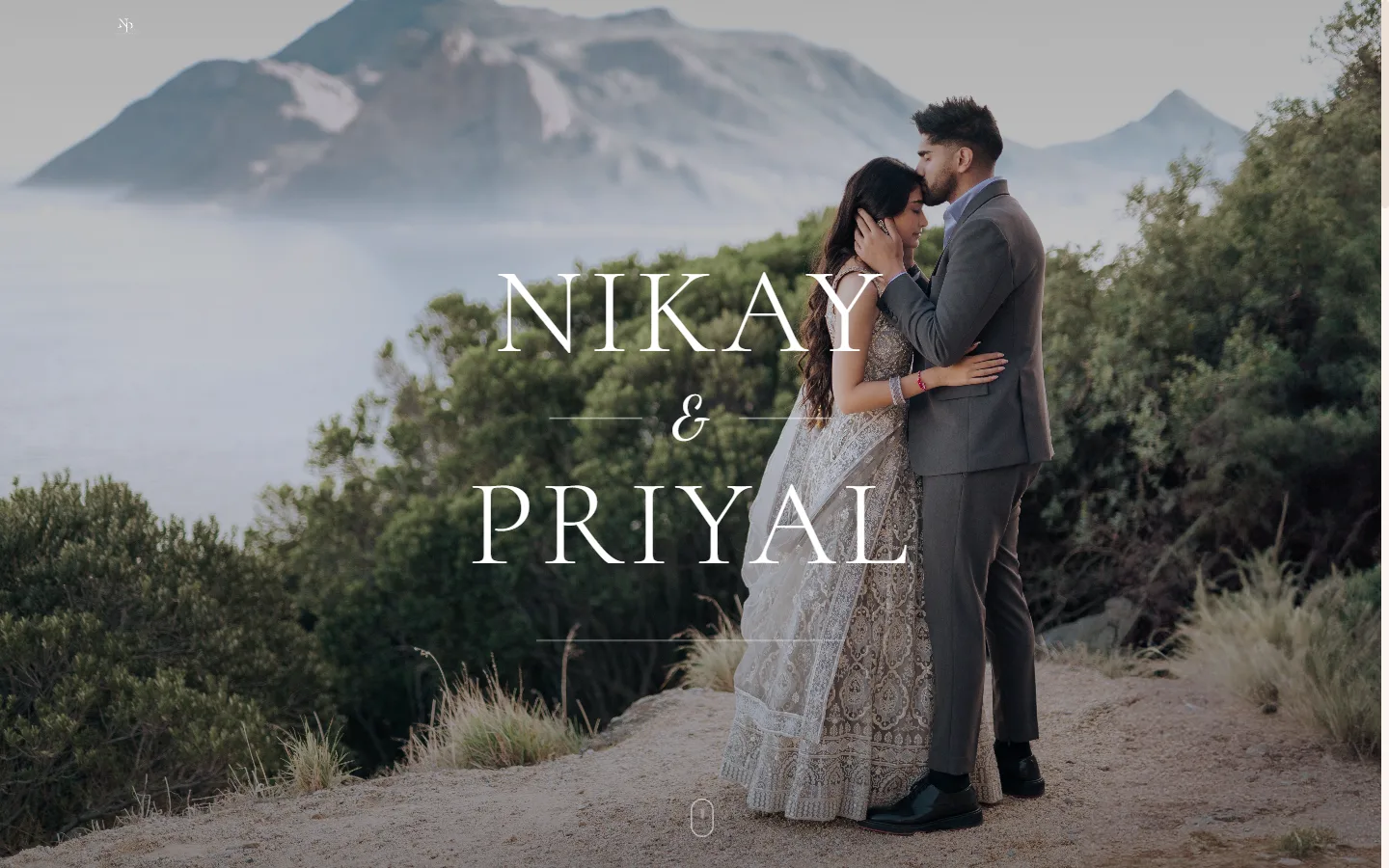
Live RSVP experience
The public event surface is available through the verified live link.
View verified evidence ↗private
Private storage and deployment evidence
Additional implementation evidence is available on request.